


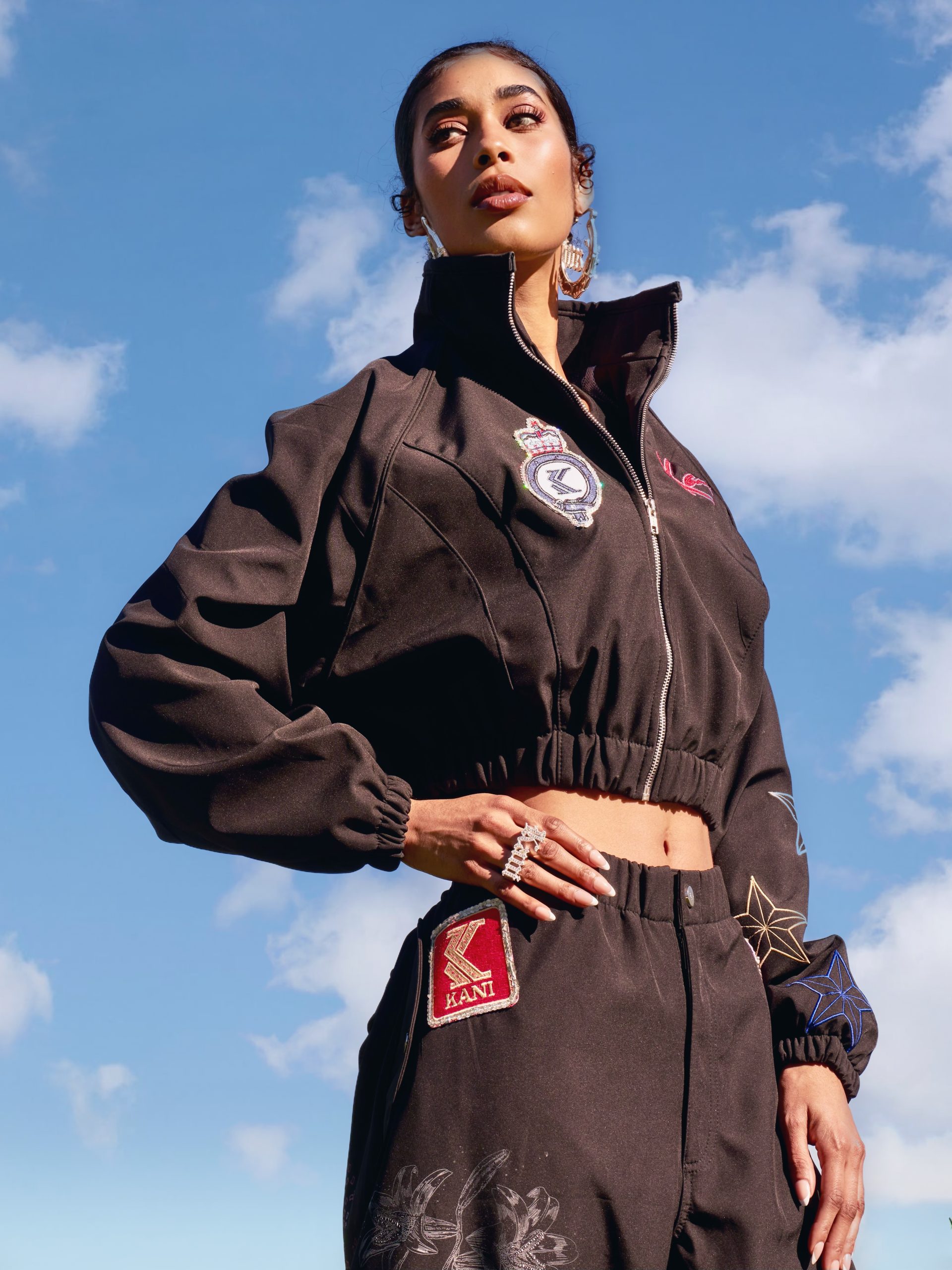
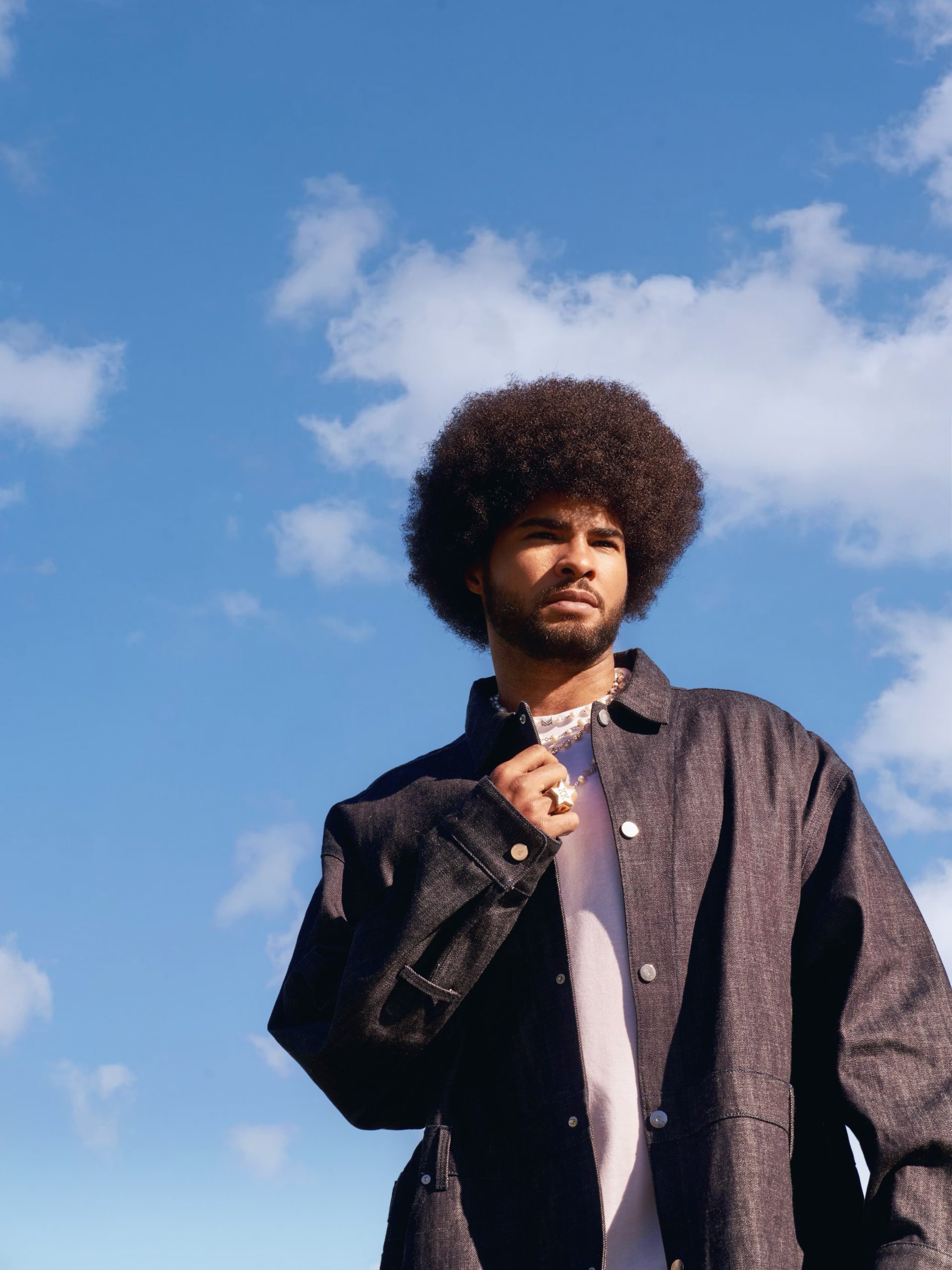
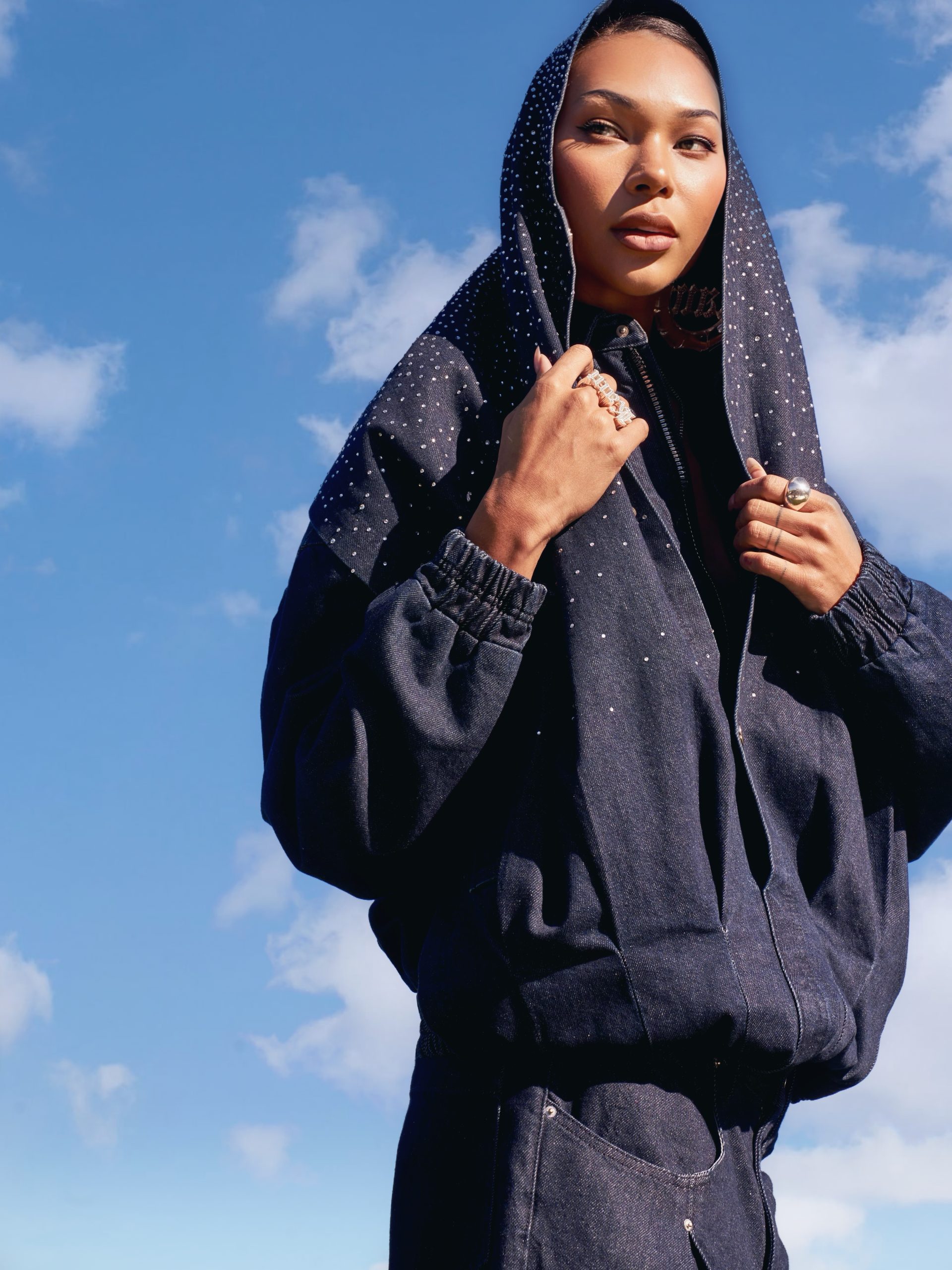
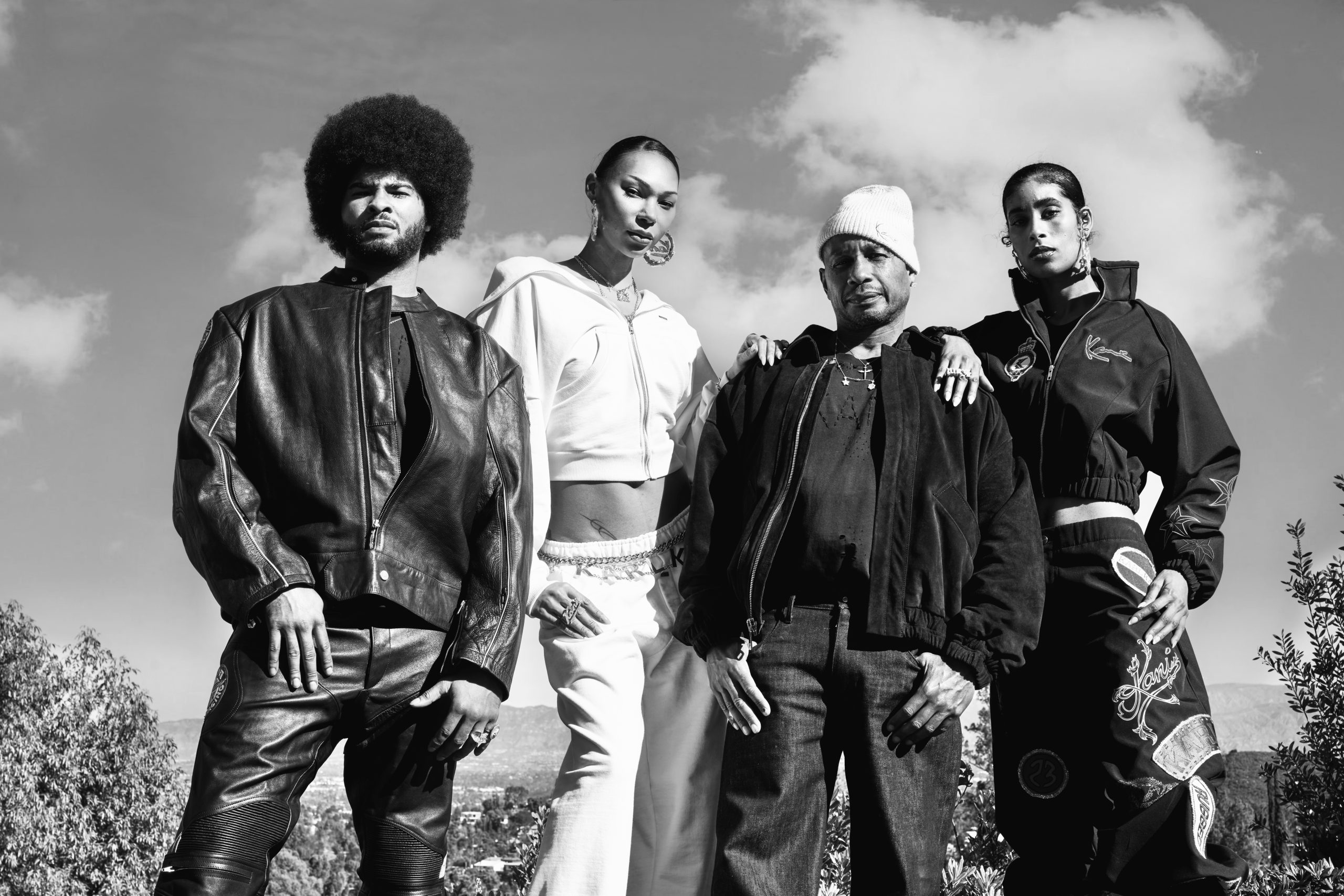
Photography { John Russo
Produced by { Photohouse Productions
Interview by{ Ken Waller
Styled by{ Sankara Xasha Ture’
Location{ Los Angeles California
Models{ Anthony Sims, Martinique Belvin, Lauren Pegues
KW: Who is Karl Kani the brand and what is and has been its’ journey through the fashion world?
KK: The Karl Kani brand has always been about more than clothes. It’s about identity. When I started the brand in 1989, I wasn’t trying to fit into fashion. I was responding to what I saw in the streets. I watched how people dressed, moved, and lived. At the time, fashion didn’t make room for that. So I made my own.
The oversized silhouettes weren’t a trend decision. They came from comfort, confidence, and self-expression. I wanted people to feel seen in what they wore, not restricted by it.
The journey has taken the brand from a small independent operation to something recognized around the world, but the foundation never changed. My brand grew because the culture grew. Artists, athletes, and everyday people embraced it because it felt real. Today, the brand continues to evolve, but it still stands on the same principle: clothing should reflect the people wearing it, not the other way around.
KW: Being a self-taught designer, what lessons have you learned and would pass on to newer designers trying to break into the space?
KK: Being self-taught showed me one thing early on: vision doesn’t need permission. I didn’t wait for the industry to approve what I was doing. I trusted what I saw and felt, even when it wasn’t popular. Learning to trust myself is something I rely on heavily.
Another lesson is to listen. The streets, the youth and culture will always tell you what’s next, but only if you’re paying attention. Fashion doesn’t exist in a vacuum. Music, history, politics, and everyday life all shape it. Trends move fast, but culture moves with intention.
The key is also consistency. It matters more than hype. Talent opens doors, but discipline and constantly showing up, and pushing boundaries keeps them open. You have to be humble and open to refine your work, and stand behind your ideas even when no one’s clapping yet.
I’d also tell designers to protect their originality. Don’t chase what’s already working for someone else. Your story is the value. Trust your instinct and your eye. And finally, learn the business. Fashion is art, but it’s also contracts, production, pricing, and distribution. Creativity gets you noticed. Knowledge keeps you standing, doing great business keeps you in business.
KW: To whom would you invite to your dinner table both living and deceased, why, and do you believe those individuals would help you along your path both professionally and personally?
KK: Tupac Shakur would be at the table because he understood how to use creativity as truth. He wasn’t afraid to be vulnerable or confrontational, and that balance is powerful. Professionally, he’d push fearlessness. Personally, he’d remind me why authenticity matters.
Steve Jobs would be there because he understood vision on a different level. He knew how to turn ideas into experiences and details into meaning. That kind of thinking sharpens how you build something that lasts.
Both would challenge you. And that’s who you want around you.
KW: Which campaign will you always remember and which one would you have preferred to have a do over if you could?
KK: The early ’90s Karl Kani denim and streetwear campaigns will always stand out. They weren’t trying to fit into fashion. They reflected real people, real culture, and energy. Seeing the clothes move through music, sports, and everyday life made it clear we weren’t just selling product, we were shaping a moment in time.
If I could redo anything, it would be some of the late ’90s mass-market campaigns. Growth came fast, and with scale, the storytelling sometimes got diluted. Looking back, I would have protected the brand voice more carefully. Reach means nothing if you lose the soul. That lesson stays with me.
KW: If you could have worked with anyone as a model for your clothing both in the past and present, to whom is that individual (s) and why? Please choose one male and one female at least
KK: Bob Marley would’ve been powerful because he represented freedom, culture, and purpose beyond style. His influence crossed borders and generations, the same way the brand has. He stood for individuality and truth, which aligns naturally with Karl Kani.
Sade would be my female choice because her presence is quiet strength. She never chased trends, yet she’s timeless. That confidence, restraint, and authenticity reflect the balance I’ve always aimed for in the brand—strong without shouting.
KW: What has always set your brand of clothing apart from all the rest?
KK: Karl Kani was built from the culture, not inspired by it from a distance. The clothes came directly from lived experience; the music, movement, community. At a time when hip-hop was overlooked by the fashion world, we centered it and treated it with respect.
The brand has always stood for ownership, confidence, and self-expression. That’s why it resonates across generations. Trends fade. Authenticity doesn’t.
KW: Which materials have aided itself more to your claim to fame as a designer and which material or materials would you like to include in your collection (s) of clothing moving forward?
KK: Cotton and denim have always been essential. They’re honest materials that are durable, wearable, and expressive. High-quality synthetics also played a role because they allowed flexibility in shape and function.
Moving forward, I’m interested in technical fabrics, sustainable textiles, and performance blends. Innovation doesn’t mean abandoning identity. It means finding new ways to serve how people live now while staying true to where the brand comes from.
KW: Is there a city that identifies your clothing more than others? If so, why?
KK: New York City, of course. That’s where the brand was born, and its energy is embedded in everything I design. The diversity, the pace, the confidence, you feel it in the clothes. New York doesn’t wait for permission, and neither did I. That mindset shaped the brand as much as any sketch ever did.
KW: What would you tell your 25-year-old self now that you wish you knew back then?
KK: I’d tell him that where you come from is your advantage, not your obstacle. Trust that. Protect your instincts. And don’t be afraid to think long-term, even when you’re moving fast.
And yes, I’d also tell him to invest early in Facebook and Amazon.
KW: Is there an item you wish you could have had your branding on but never got around to doing so as of yet?
KK: I would’ve loved to create a Karl Kani styling app; something that understands personal energy, not just trends. Style is emotional. It’s how you feel, how you move, where you’re going.
An app that reads your vibe, works within your budget, and evolves with you feels like a natural extension of the brand. That’s where fashion and technology meet in a meaningful way.
KW: What do you want your legacy to be or has that already been established?
KK: I want my legacy to be about authenticity and impact. Not just creating clothes, but opening doors and shifting how culture is valued. The brand already has a footprint, but legacy isn’t a finish line. It’s something that grows through the people it inspires.
If future designers feel empowered to trust themselves because of what I built, then I did my job.
KW: Can you tell us about your high anticipated new memoir?
KK: This book isn’t just a memoir. It’s a blueprint. It shows what it really takes to build something from nothing without shortcuts and without pretending the road was easy.
It’s for anyone navigating creativity, business, or purpose. I share the wins, the mistakes, and the mindset that kept me going. The book isn’t about fashion alone. It’s about designing your life with intention and standing on who you are. That’s the real story.
To order your book…
https://www.simonandschuster.com/books/Karl-Kani/Karl-Kani/9781668015698