
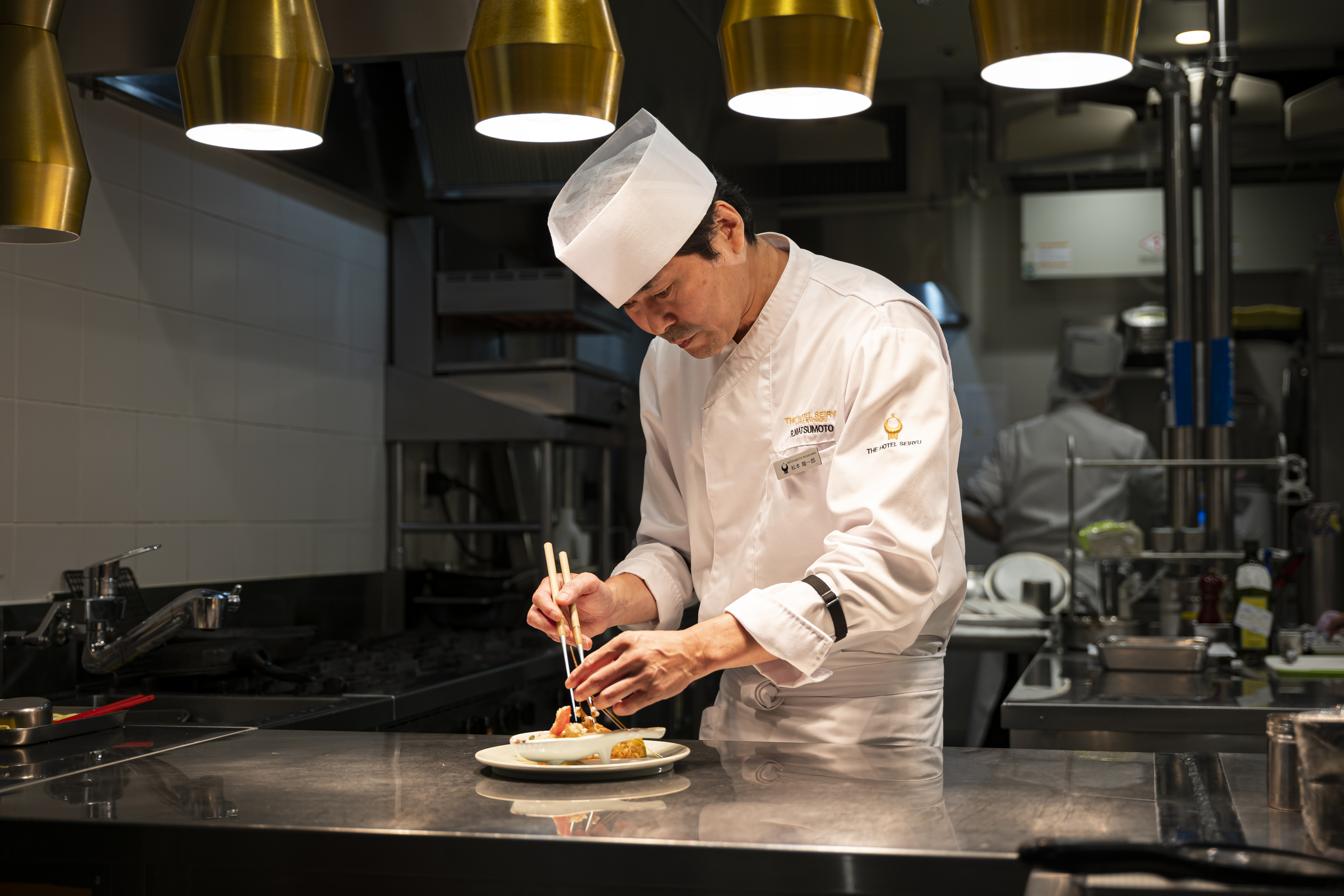
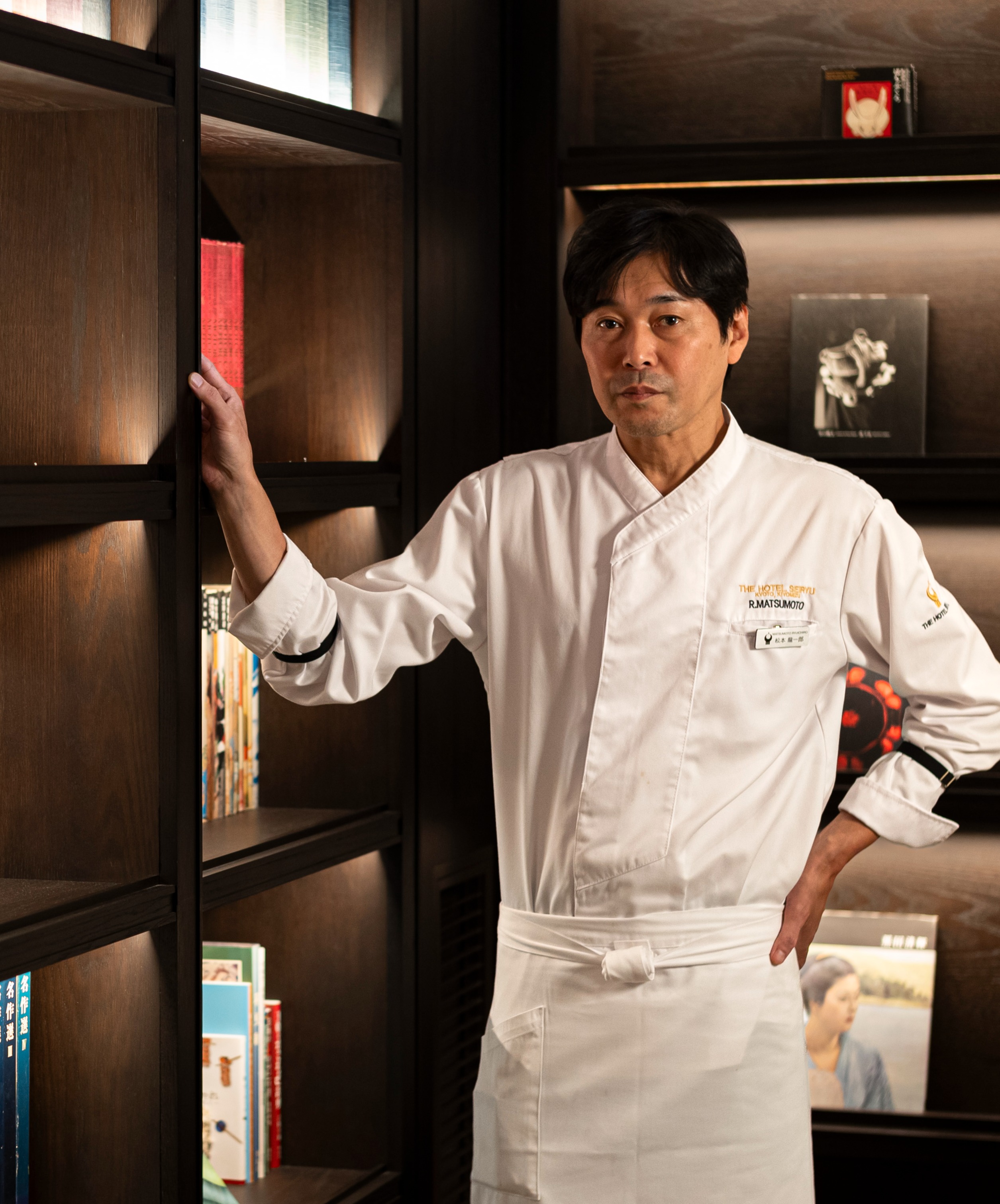
RYUICHIRO MATSUMOTO
EXECUTIVE CHEF
Interview} Ken Waller
Location} The Hotel Seiryu Kyoto Kiyomizu
KW: How would you describe the culinary philosophy that guides your kitchen here at Seiryu, and how does Kyoto’s heritage shape it?
RM: At The Hotel Seiryu, the foundation of our cuisine is always rooted in the spirit of washoku. This traditional Japanese culinary philosophy is deeply intertwined with Kyoto’s unique history and heritage. Carefully preserved over generations, it is passed down to younger chefs who continue the legacy, ensuring the enduring spirit of Japanese cuisine.
What defines Kyoto cuisine, in particular, is its intimate connection with the seasons. We select ingredients at their peak, and the art lies in highlighting their natural bounty while expressing the subtle shifts of the seasons in every dish.
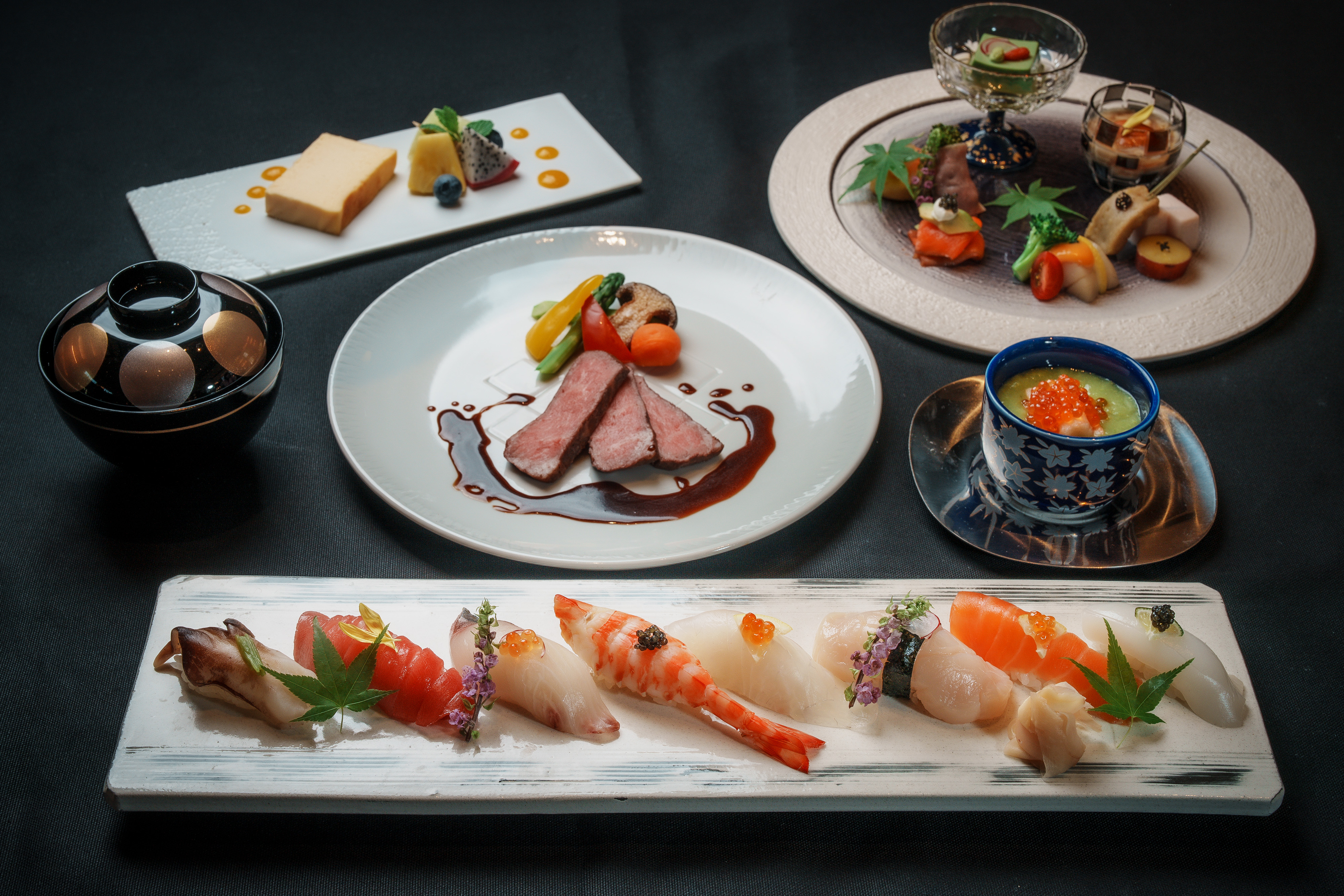
At The Hotel Seiryu, we offer not only Japanese cuisine but also Western dishes. Even in Western preparations, we incorporate elements of washoku, creating plates that reflect Kyoto’s traditions and the natural rhythms of Japan’s seasons.
Above all, our greatest joy comes when a dish is served and we see our guests’ expressions from the open kitchen. When a dish lingers in the heart and inspires the thought, “I want to return to The Hotel Seiryu,” that is, for us, the most meaningful reward.
KW: Kyoto is known for its seasonality and subtlety. How do you translate those traditions into a modern luxury dining experience?
RM: To translate Kyoto’s sense of seasonality and refined sensibility into a modern luxury dining experience, we approach space and cuisine as a single, inseparable whole.
“restaurant library” within the hotel offers a distinctly Western setting, yet it serves Japanese cuisine. This deliberate contrast highlights Kyoto’s unique aesthetic—marked by restraint, depth, and subtle nuance—creating a dining experience of exceptional refinement.
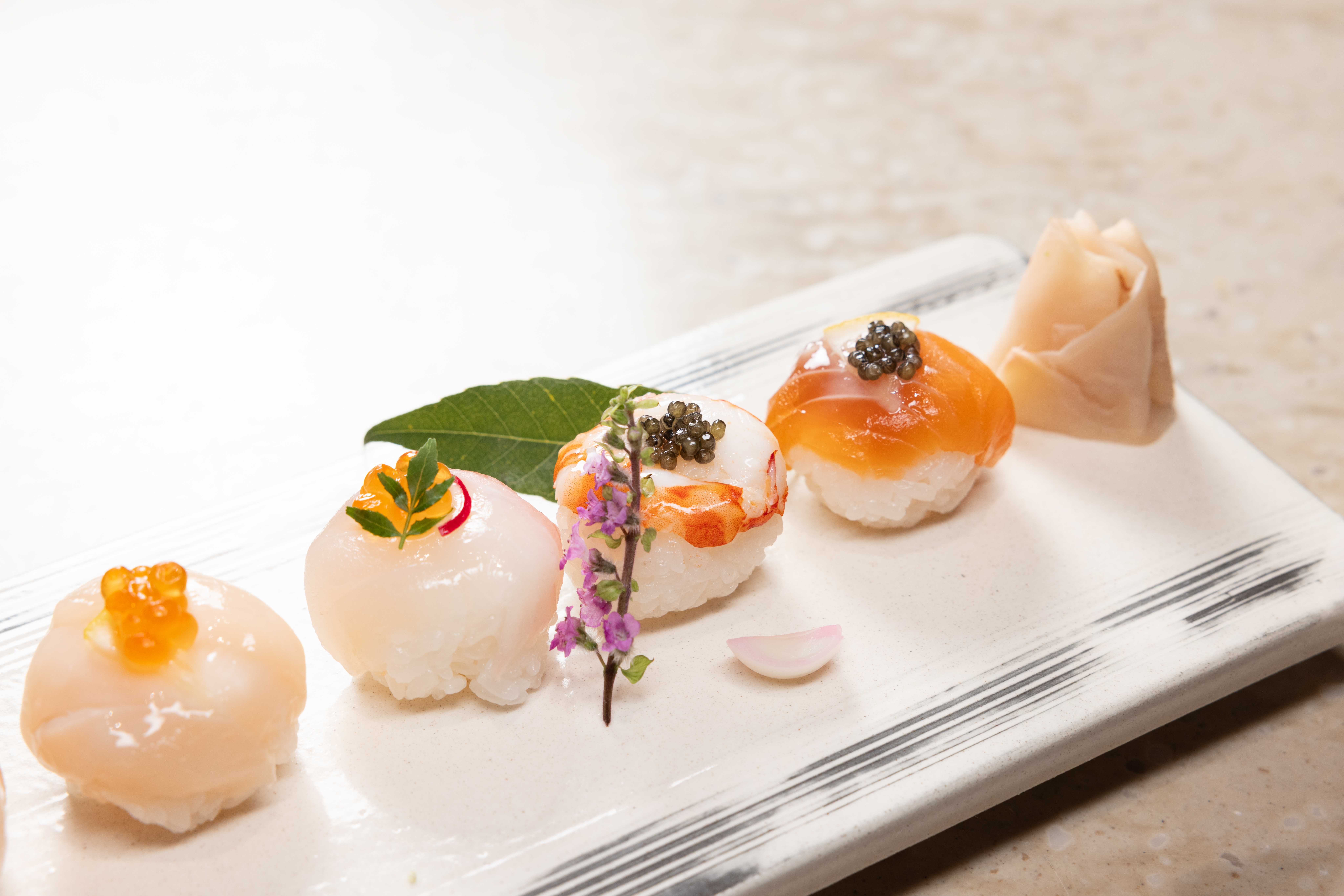
In the evening, “restaurant library” transforms into a bar offering sushi. Temari-sushi, deeply rooted in Kyoto’s history, represents one of Japan’s enduring culinary traditions. While Japanese cuisine encompasses a broad range of styles, we remain true to its essential principles—seasonality and delicate flavor—while allowing freedom in presentation and expression. In doing so, we elevate tradition into a form that resonates with the modern guest.
KW: What ingredient or dish best represents the spirit of Kyoto to you, and why does it resonate so deeply?
RM: For me, the ingredient that most profoundly embodies the spirit of Kyoto is Kyo-yasai, the region’s traditional vegetables.
Kyo-yasai is a collective term for heirloom vegetables cultivated within Kyoto’s distinctive climate and terroir. Each variety, passed down through centuries, has developed its own unique shape, flavor, and texture—truly an expression of place shaped by time.
For us as chefs, presenting these locally grown vegetables without diminishing their inherent character is a source of deep fulfillment. Kyo-yasai stands as a symbol of Kyoto’s culinary culture, and through a single dish, we aim to convey to our guests the subtle turning of the seasons and the quiet vitality of the land from which these vegetables are born.
KW: How do you collaborate with local farmers, artisans, or producers to bring authenticity and terroir into your menus?
RM: We regard our relationships with local producers and artisans as a vital source of inspiration for our cuisine. Ingredients cultivated with patience and care, along with techniques honed over many years, are always accompanied by stories. Listening directly to these voices and understanding the intentions behind their work forms the very foundation of our cooking.
When it comes to local vegetables, we place particular importance on visiting the growers themselves—taking the time to understand the dedication, labor, and spirit invested in each harvest—before bringing those ingredients into our kitchen. Translating the producers’ aspirations into our dishes is both our responsibility as chefs and one of the most meaningful ways to share Kyoto’s culinary culture with our guests.
Our mission goes beyond simply sourcing ingredients. We strive to deepen our understanding of each season’s nuances and every ingredient’s individuality, elevating them into cuisine that reveals their fullest expression. Through such dishes, we hope our guests can sense the living breath of Kyoto’s land and culture.
KW: Guests at Seiryu come from all over the world. How do you balance global palates with the quiet, refined flavors Kyoto is known for?
RM: To ensure that guests from around the world can fully experience Kyoto’s delicate flavors and refined aesthetic, we place particular emphasis on the visual expression of our cuisine.
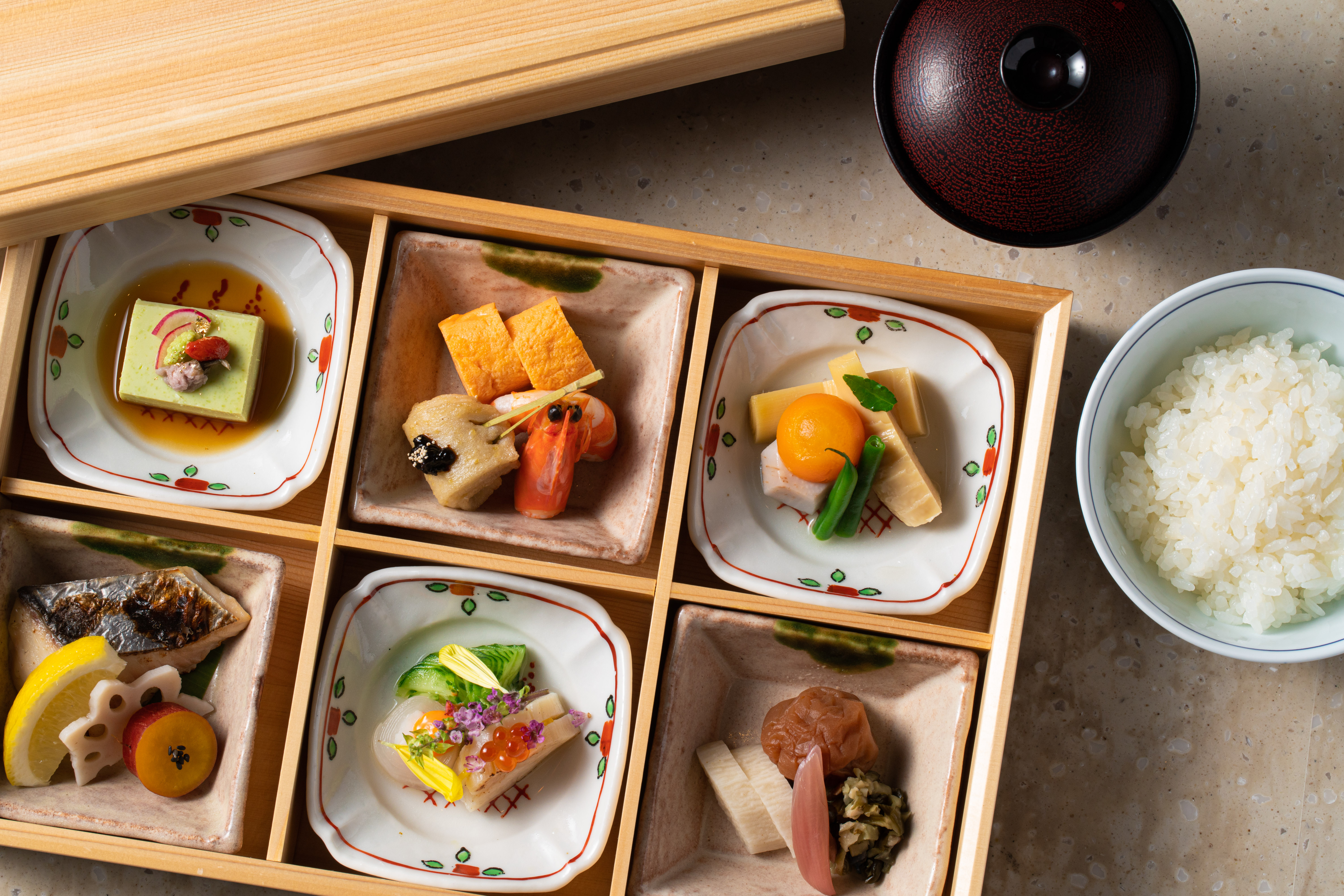
A traditional Kyoto-style Japanese breakfast is one example.
This uniquely Japanese culinary form combines seasonal ingredients and meticulous presentation within a single box. From the moment the lid is lifted, the unfolding colors, aromas, and seasonal cues become part of the experience. Even the vessel itself is integral to the story, inviting guests to savor each element as part of a carefully orchestrated narrative.
In Japanese cuisine, great care is given to expressing seasonality not only through ingredients but also through flowers, garnishes, and subtle decorative elements. The choice of vessel can transform both the visual impression and the perception of flavor. For this reason, we value every detail—from the food itself to the tableware and presentation—as essential to conveying the beauty of Japan. Together, these elements create a sensory experience that communicates the rhythm of the seasons and the quiet breath of the land.