




M A T T I A D E G E N N A R O
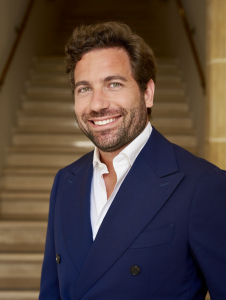
Photographed by John Russo
Interview by John Russo
JR: What specific challenges did you face in adapting this historic structure to meet modern luxury hotel standards without compromising its original architecture?
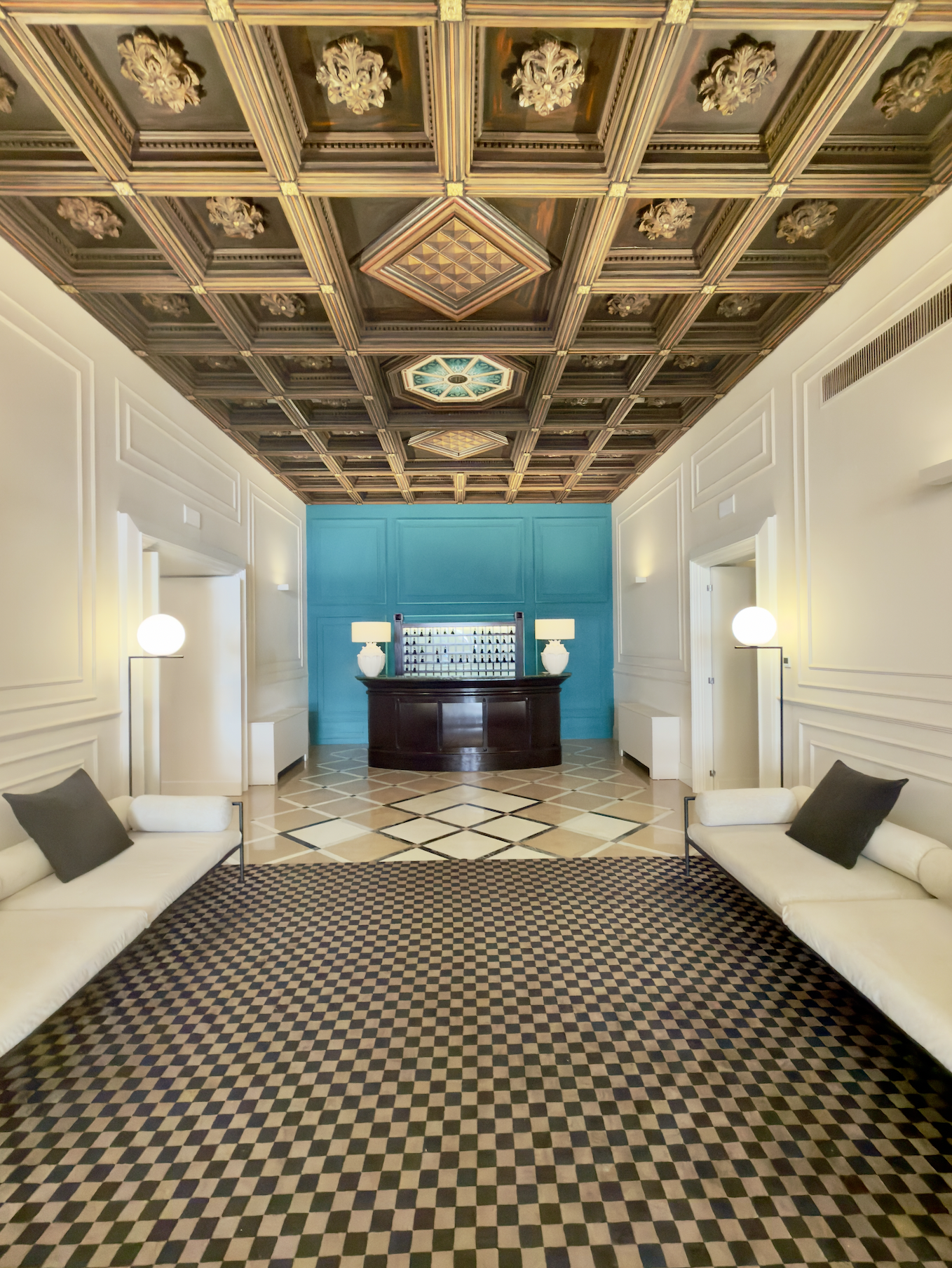
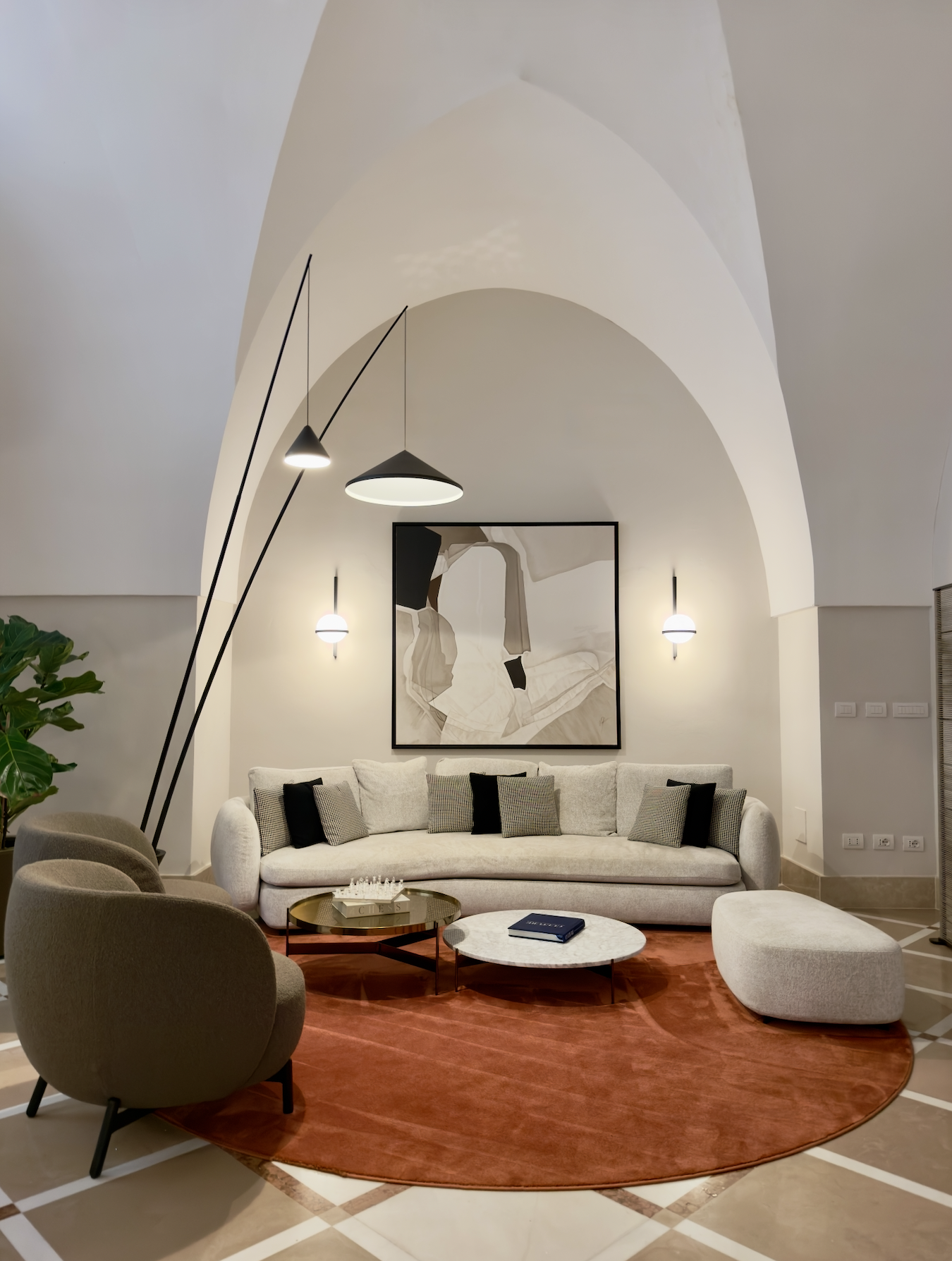
MD: That’s a nice and not so common question. Because first of all this building is protected by the State. So everything we do here, we need to ask permission, a commission, which is not related to the town, nobody, with politics, it’s just to preserve the building and its historical heritage. So the first challenge is to do something that is acceptable for this commission. And they have no time to answer you, so if you ask something they can also have years, it takes years. So this is important. I think we tried to make people understand that this was a noble house, but it was not that classic noble house. So the idea is to create a modern house in an historical palace, so to try to replicate the spaces you find in a house like solotto, orangerie as more for conversation in Barbas or the terrace on the rooftop without compromising the idea that still this is a palazzo, this is a house. It’s not something far from it. And since we have no tradition of luxury furniture, we decided to go with the Italian model and design. So the idea was to keep what was actually original as it was and what is new, is something that you understand is new. So to preserve the past, we decided that what is new is clearly new, you can understand that. So probably that was the key of the latest renovations. Of course the challenge is in the room space, the views, because you need to respect the former architecture, and so maybe some rooms are smaller, some are newer internal, or the bathrooms are not big as we would like to do. But we need to respect the original architecture of the place. So I think the idea was actually to make people enter an historical palace, but then clearly understand where there was a new touch on it.
JR: How do you approach the maintenance and preservation of traditional Pietra and historic local features like star vaulted ceilings?
MD: Well, the important thing is to find the right artisans. So you cannot give to anybody some work in these places. So there are still some people, rare people, who know how to work with stone. So we select the companies that work with us, to restore it in the original way. Another thing we have done, for example for the spa, was to engage an architectural firm, a studio, they work a lot with massarias, so they work a lot with the preservation of these kinds of places. So I think it’s important to find the right designer who understands the value of a vault and the difference between a vault and keep them the right importance, so then they don’t need to change them, because they know that they will be the protagonist of the place.
JR: Can you share a story about a specific architectural element or historical detail discovered during the renovation that maybe you thought to uncover, preserve, something that you saw that was really cool that you did not want to get rid of and you wanted to play up on?
MD: Well one particular part of the building is the stairs that goes from the ground floor to the second floor.Those stairs are protected because they are not straight, so it’s part of the building and it goes with the building. So the nice part is that actually it follows what was around the building and the different steps of the construction, because actually this was one floor at the beginning and then the second floor and the third floor came much later. So we have pictures of this building with the chariots in the front and without the third floor. So those stairs are actually the bone of the building. And when they said you can touch it because it’s not straight, it’s something really Italian, not so common I would say. And in the front there this face of the man who bought this building in 1880 and he is related also to the origin of the building because this was the first locanda in Lecce. Locanda in English, so a place for people just coming here. And so we found out this small furniture is related to the beginning of the hosting works made here in the late 19th Century, because it was first a noblier palace for a family from Naples and then it was abandoned for fifty years and then became an orphanage and then again a locanda and la patriota, the name itself is related to the Italian independence worth, so patriota in English means…
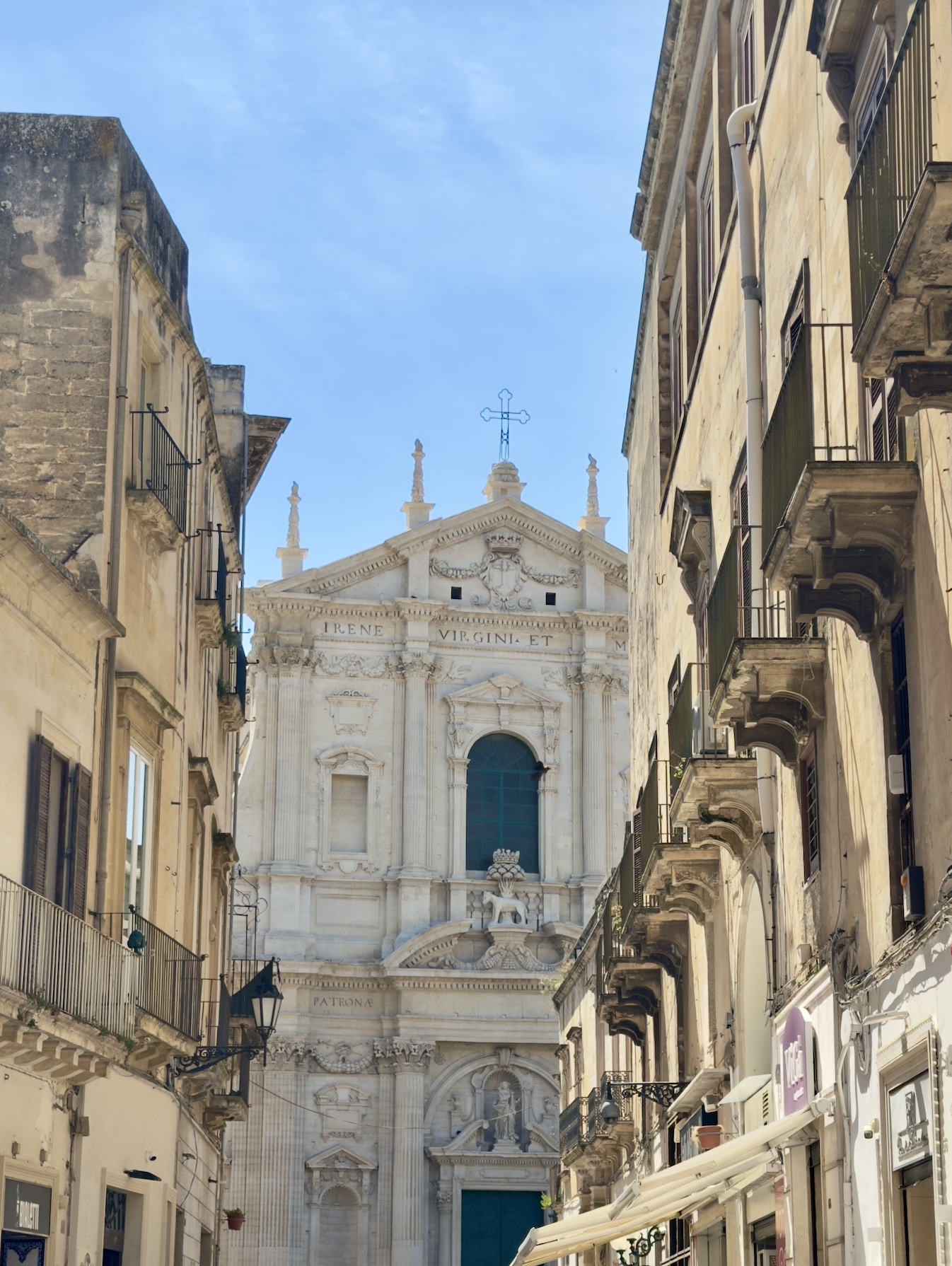
Patriot, the State, the origin of the State, so it’s related to that period, the late 19th Century. So it’s kind of part of the Italian story inside this place, as is the church in front of us. Because the church was built on the Jewish Market. When the Spanish people, the church fought the Jewish and pushed them away from the city, they built the best thing in the most important place, which was the market for the Jewish, important. And indeed, every road around us has the name both in Italian and Jewish, if you go around.
JR: Is there still a Jewish culture here?
MD: There’s also a small Jewish museum close to here. And in Puglia we have, and in Martina Franca and other places related to this Jewish tradition. So it’s like this palace was overlooking a lot of things going around the Italian history of the last 300 years.
JR: How do you balance the integration of invisible modern technology of climate control, smart room features, high speed Wi-Fi, with the ancient bones of the property?
MD: (Laughs) That’s nice. Well my idea of technology in a hotel is that it should be invisible and easy. So when something technological is too difficult, it’s not useful. And also because we have business hotels, the other hotels are mainly business, so people stay one night, so if I am tired after a day of work, I don’t want to understand how this works. So this idea of a home is the same for a TV, a TV like yours, it’s not something I need to find a way to see Tele Uno, our main channel. On the other side, what we have used in the recent years are wireless connections. So fire alarms or some of the air climate controllers are wireless. So only in some places the walls are so thick that the signal doesn’t work. I think wireless is an opportunity now to give technology without wires and so without breaking these amazing walls.
JR: I know you touched on local artisans and historians, master craftsmen to ensure the interior decor and restoration work will remain deeply authentic and regional. I think that’s what we noticed, because sometimes you go to these historical properties and they hire artisans that just don’t know what they are doing. And I feel like with this property, the spa and other aspects of the property, you guys have kept the architectural integrity and it’s refreshing to see that has not been bastardized as people do all over the world, just to cut costs and just to get it done faster. So is that something that you as an owner kind of put your foot down and was like it’s got to be this way or no way?
MD: Yes, also because we have an internal, two interior designers, a group. So we supervise all the projects we do. And it’s really important to keep an eye on what they are doing. As I said before, the most important thing is who you choose to do the work. So if you go cheap and you choose the one who does the apartments, it’s hard for them to understand the value of what they are doing. While here are mainly couples, father and son, working, I saw the balance of the work in the spa and it was like seven hundred hours of work, these two guys. Because if you make them work by hand and we do everything by hand here, because we cannot have big trucks around, cranes, and so forth, and so everything is made my hand. So if you choose the right people, they work as you want. One problem that we have here, which is related to the land and also the name of the spa, which is IDUME, because this was the river beneath, because they say there is a river here. And actually there is water . There is a palace next to the church which is called Palazzo Adorno and it’s a palace owned by the province. And they have this library and you go there, to a public library and they say don’t go there, two steps and there is water, on the ground floor. So water comes from the land. And the name of this water is IDUME and it arrives in the military and there is the river that goes on the surface like twenty meters from here. And so the problem of this property is to keep the water down because it goes on the walls. And there are people who know who to work with stone to avoid that. So for example, I put some fake brass on a roof to make it nice and we had a problem and had to take it down, because if you leave the stone, it dries in the right time so you don’t get the water inside. If you put something, a plastic, then the water beneath cannot dry and so you get the water inside. So if you work well you do not have problems with the water coming into the building. So it’s something in the long term, tells you if you have done the right work, that people have learned in years, or you have done something that is fast and cheap and the building will tell you.
JR: And I think that is so important, spending the money to produce a high quality product, because I feel that there are certain people like myself and Ken. We travel all over the world and stay in the best hotels, there are so many things that stand out that are great and there are so many things that we walk away and we are like they were so close but they just missed that one thing. How do you stay on top of those aspects, how do you stay on top of what people want, what resonates with people and what is missing and how do you improve what constantly needs improving, for the guests of luxury travel?
MD: I think there are two aspects. One is from the outside, so how the market is evolving, because the market is always fast. So getting with other owners of leading hotels for example is useful and to understand what are the trends, what people are asking for anywhere in the world. And on the other side is to stick to what you want to offer, because if you start following the trends, okay, let’s change this room every year, every two months, saying okay, what can I do to improve this space to be what I mean it should be? So I think it’s to get to the details and improve each detail that you can every time, which is tough sometimes, it’s expensive and you need to have a strong team working on that, because we have a group, so I am here once a week. So you need a whole team working to improve that experience together. So I think it’s important to imagine what you want to offer, listen to guests, to the world and to what your tell people you and then say okay, my vision of this space is this, how can I improve this further? So I think it’s a matter of making things better every time, looking at the details of what you want to offer and not just I like the statue and I would put the statue there, that’s not the point, which is often the case, especially in family owned hotels, like my mother likes that, let’s put that there, no. It’s not easy. So one should decide, but everyone should contribute to that decision and the vision that you want to bring to life.
JR: I think that finding the right staff, training the staff, so there is a kind of uniformity across, there are guidelines and standards. We notice that is a lot, everywhere we go, some staff excel and some staff just don’t. We found that this property definitely excels, from knowing your name to greeting you to talking about the property. So how do you keep your staff or train your staff, to have that uniformity across the whole spectrum, from housekeeper to chef to doorman to waiter?
MD: Well keeping the staff is not easy now. Fortunately in Lecce, we are considered an achievement for most of them, so arriving here, working with us, is something they want to keep, that’s good. I think the other part is going over the standards, which are standard, so everybody has them. And working together and sharing a vision of service. Fortunately here in Puglia, in Italy generally but in the South of Italy especially, we have this warmth inside. So if we are able to keep the light on, the fire inside them, they will express that more easily than in other parts in Italy or in the world. But the most important thing is that they understand that in front of them they should not just have a customer or a number, but they have a person who has feelings and you should be empathetic with those feelings and try to create a connection with them, because people don’t remember probably the size of the room but they remember how they felt when they were there. So it’s really important to share with the staff the vision of having like friends in a house, which is something we know, something related to our culture. So we share, we divide the training in a more technical operating part and the part related to emotional intelligence. So the part related to the emotions, the feelings, how people are seen and heard during their stay. So it’s a multi-directional way, it’s not only I listen, I tell, do you want something, but it’s also I listen to what John told me and what Ken told me and to elaborate on that to make their stay even better. It’s not easy, so the idea is when you find a person with this attitude, we work on the essentials, because you can work on the essentials, on the operation, you cannot create a good person even if it’s technically perfect. So we look for those attitudes and then work on the technicals.
JR: That’s a good answer. I love how you said that even though the room is very important, you are so right that people forget the room itself but they don’t forget a certain interaction with the staff or the spa or the restaurant, that is very true, how you feel when you leave is so important.
MD: Yeah they say there are two moments you always remember, the peak, which is the moment something happened that was the most important part and the end. So these are the two points you need to really work on. For the peak you need to create something wow, something maybe that wasn’t expected and the end is something you can work on, because fortunately there is always an end to a stay. (laughs)
to learn more about the Patric Palace https://patriapalace.com