
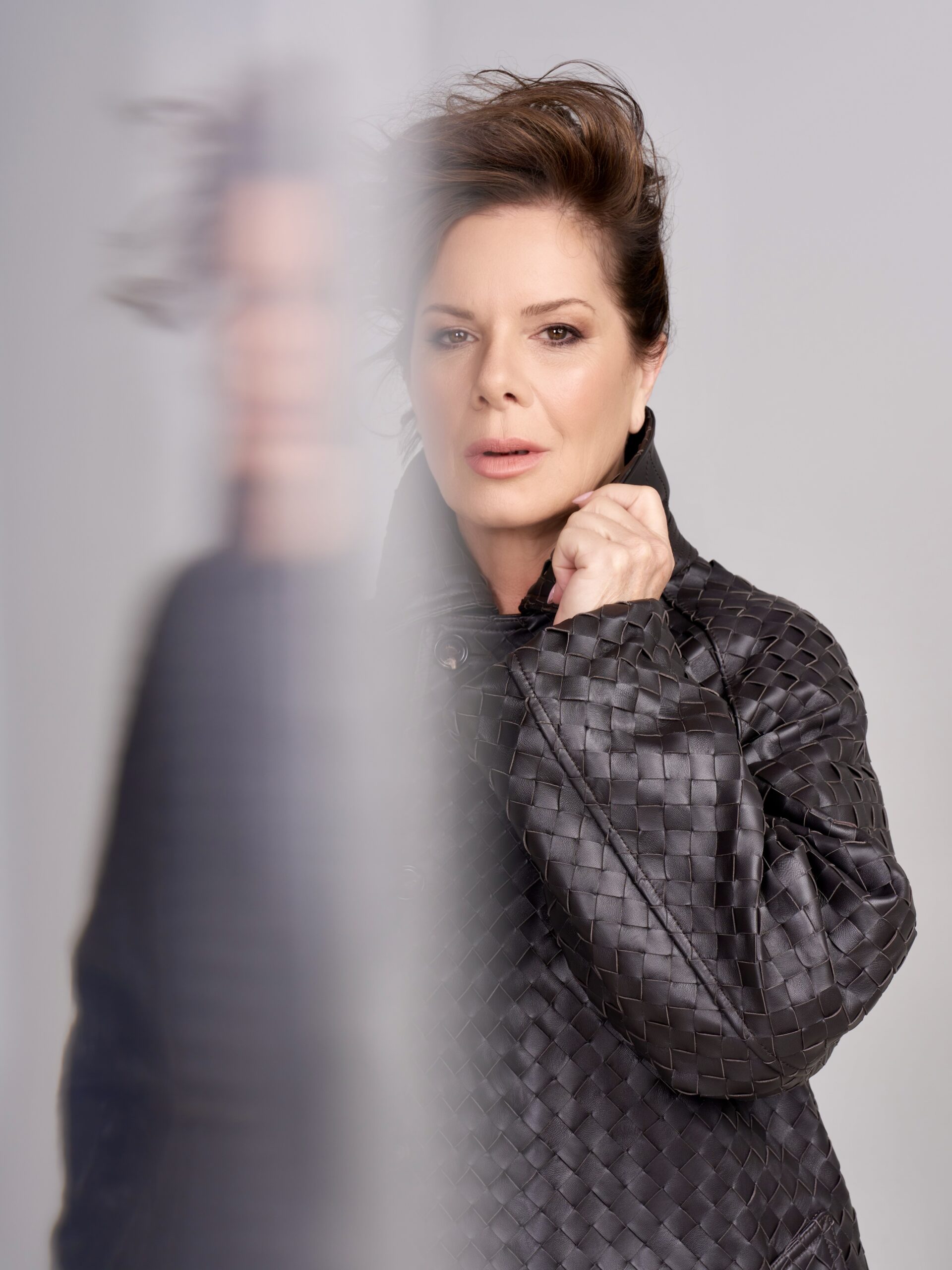
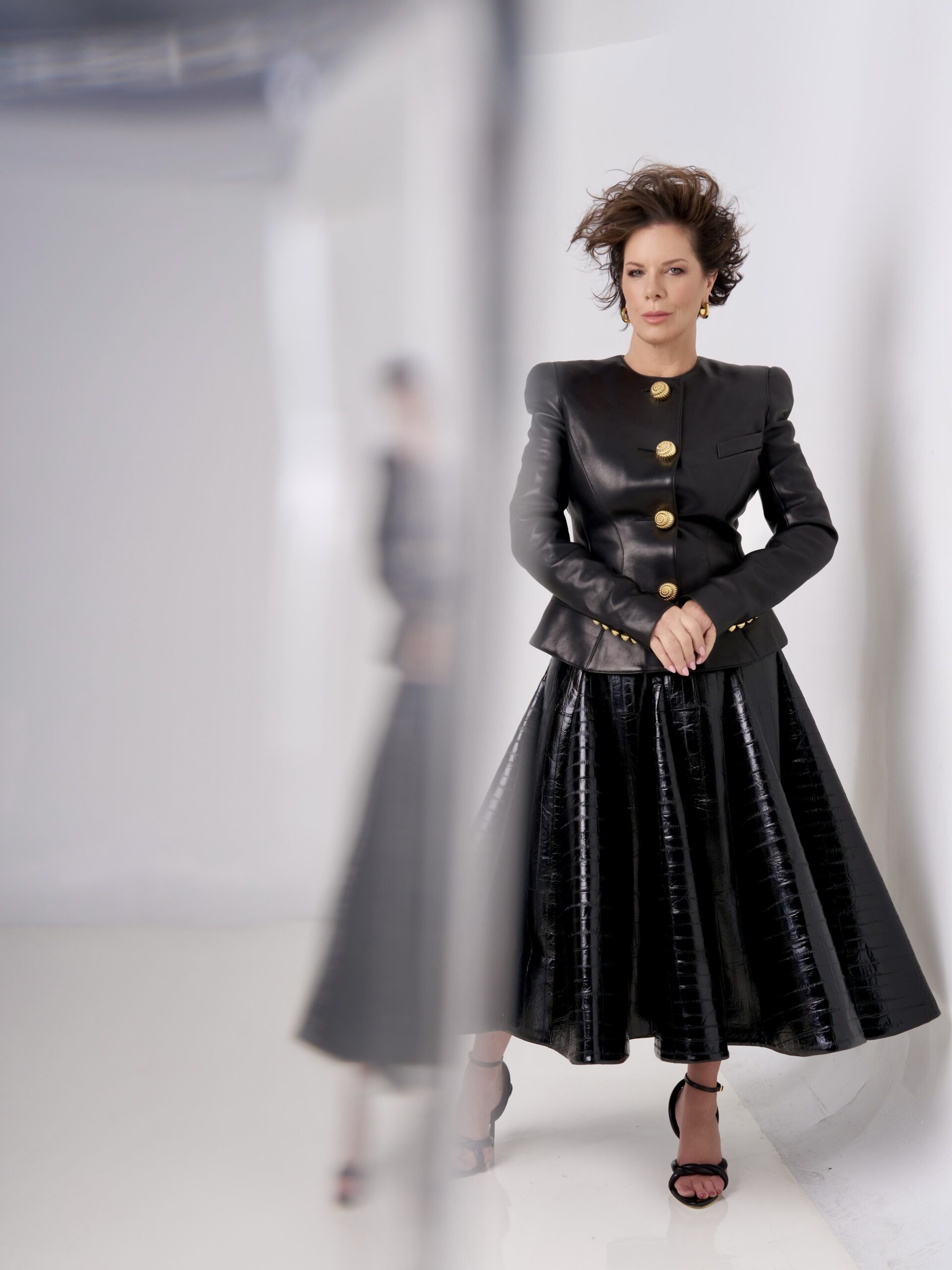
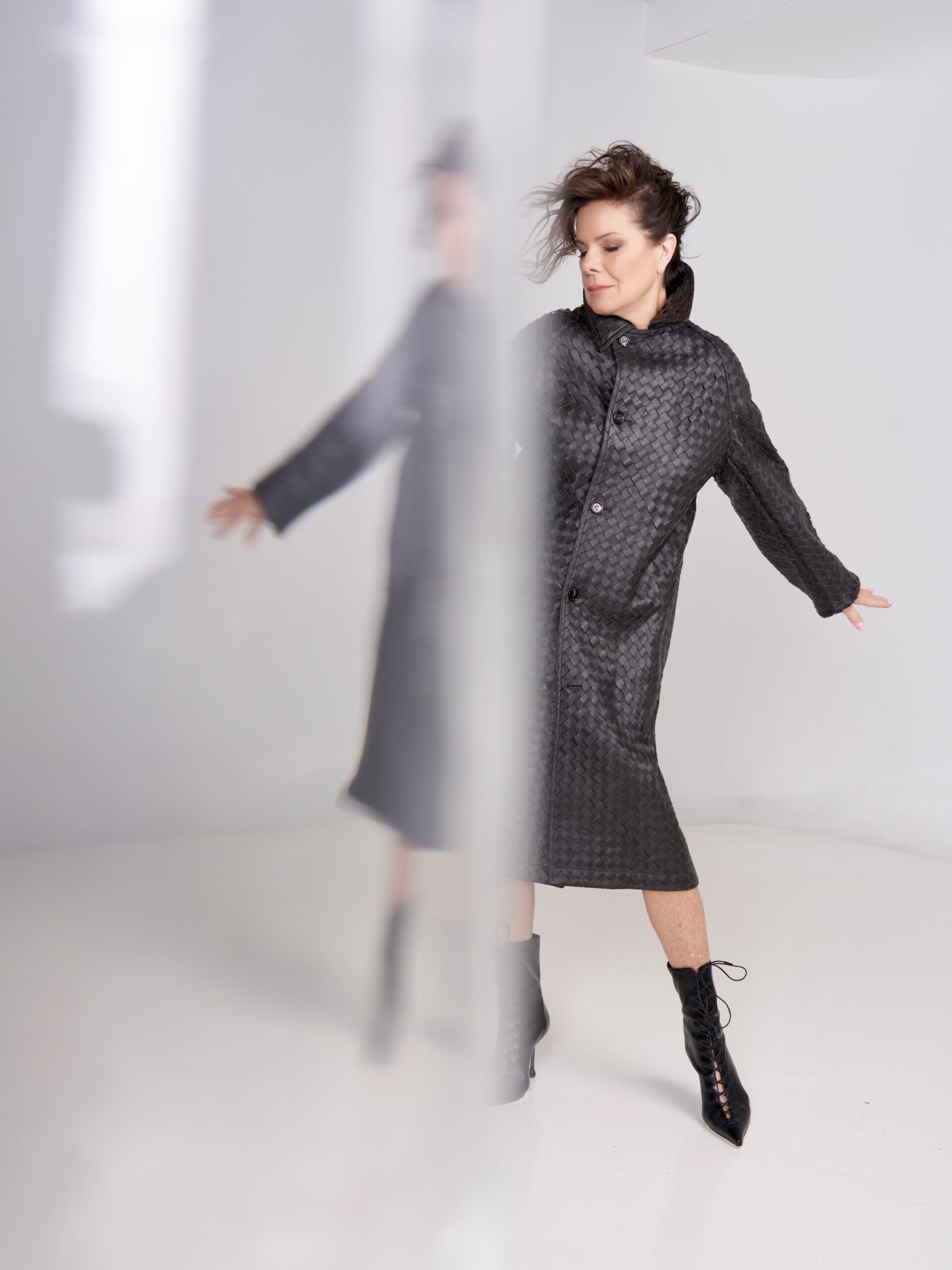
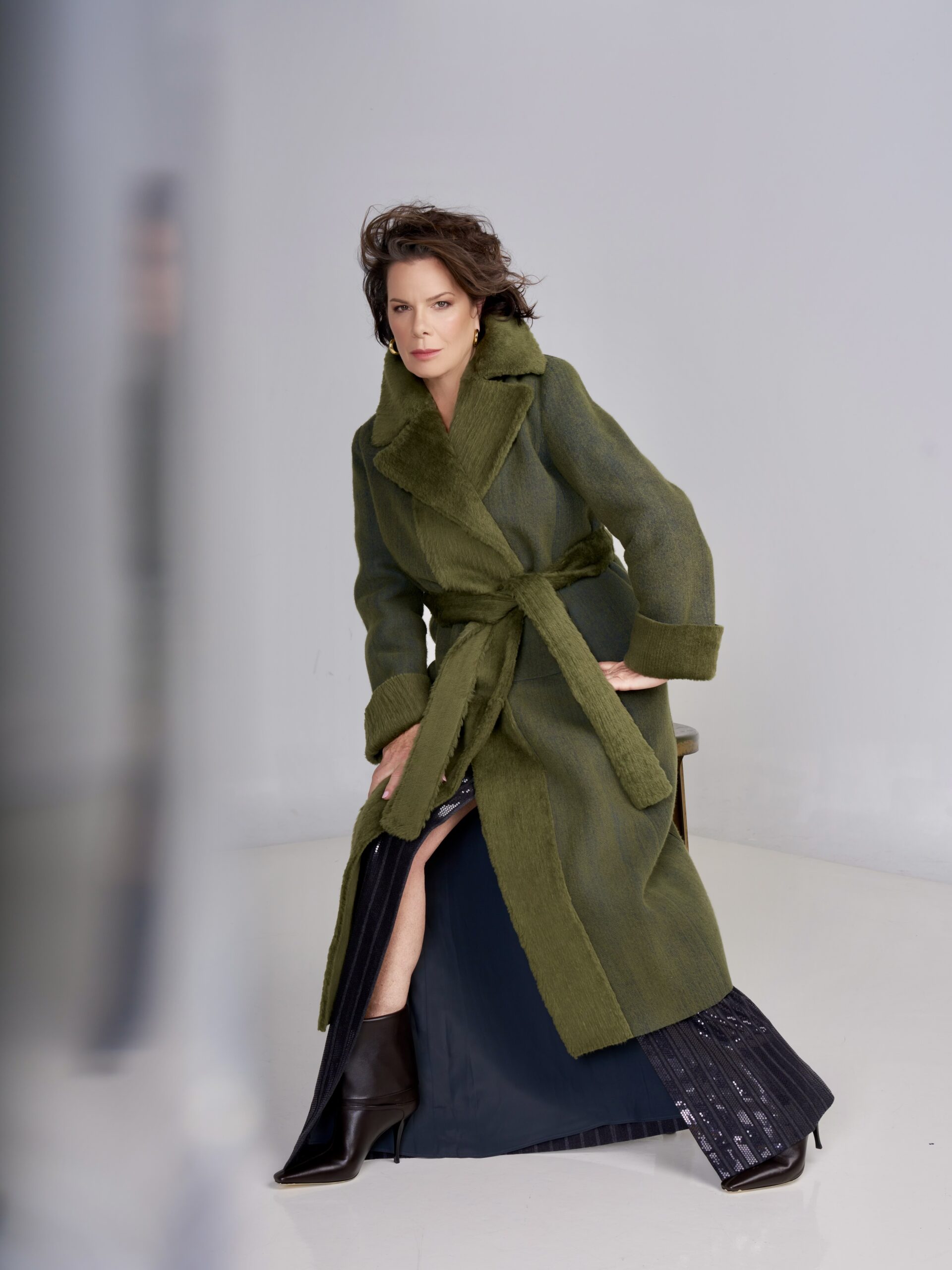
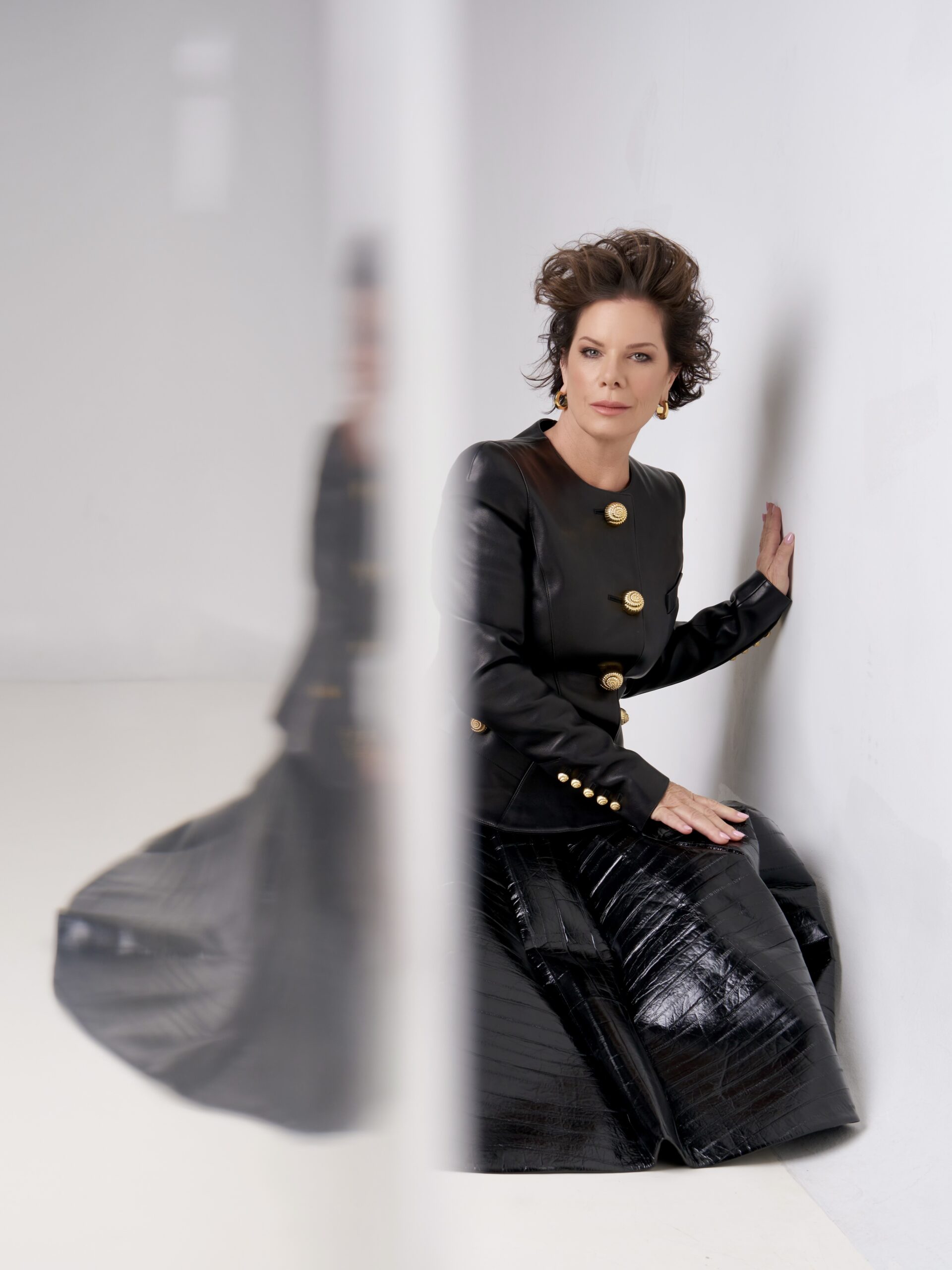
M A R C I A G A Y H A R D E N
Interview and Photography by { John Russo
Styling by { Ashely Pruit
Hair by { Richard Marin
Makeup by { Adam Beruchaud
I have the utmost respect and admiration for Marcia. Beyond her extraordinary body of work and undeniable talent, I am equally captivated by her intelligence, sharp wit, wonderful sense of humor, and refreshing candor about the entertainment industry. In a world where so many are inclined to say what others want to hear, Marcia possesses the rare confidence and integrity to speak her mind with unapologetic honesty. It was an absolute privilege to photograph and interview someone so accomplished, authentic, and genuinely engaging.
JR: When you won the Academy Award for playing Lee Krasner in Pollock, what changed the next morning? Looking back, did that recognition transform the opportunities Hollywood offered you, your confidence in your own instincts, or some combination of the two?
MGH: Well, I woke up with a naked Golden Man in my suite… which was delightful! No time to luxuriate though… I still had to give the diamonds back by noon.
And while I woke up an Academy Award winner, nothing went according to my fantasies! Hollywood immediately found new and exciting ways to underpay me! Nevertheless, the honor is priceless.
And seriously, that moment of recognition was an incredible validation that gave me a sort of stamp of approval, and confidence in my own instincts.
And though I didn’t capitalize on the moment to pursue big action films with big budgets, I was raising a family after all, I’m grateful for that “stamp” as it has translated into longevity.
In this business, longevity is its own kind of gold. You stay in the business long enough, you may surprise yourself with your work!
JR: Is there a role you passed on that you still think about and wish you had accepted? What informed that decision at the time, and what makes you see it differently today?
MGH: Usually when I turn a role down, it’s because the role would be enormously grateful that I said no!
You just know that there is another actor who could do it better than you, who could bring something more truthful or funny to the role, when I would struggle to find it. Or, the role has no moment of action that changes things… so the character is largely serving as exposition or support of another person’s journey. Which can be… well… boring. I want to take the journey myself! Now… if you really want to dish, we can talk about a few roles I accepted that I wish I’d passed on!
JR: You’ve worked through several distinct eras of Hollywood. What has changed most profoundly about the business, and how have you adapted while preserving the things that made you want to act in the first place?
MGH: Now that’s a question that deserves more than a soundbite! Yes, I’ve lived through several incarnations of Hollywood, some glamorous, some lean, and some that should never be resurrected.
Perhaps what’s changed the most is the speed and expeditiousness of everything- which is both technically and financially driven. From the casting process of putting yourself on tape rather than meeting the casting director, to the preparation of character and rehearsal, to the way stories are made, consumed, and even the way success is measured, the process is very immediate. Rather than a film slowly finding its audience, now everything is measured in clicks, algorithms, and how many people have watched something and hit “like” – even before breakfast!
The business has become obsessed with…the business. With the bottom line, mergers, return on the dollar, being seen, social media accounts with millions of (fake) followers, and satisfying built in audiences. The sad thing is that kind of financial pressure can make studio’s less willing to take a gamble on an unknown, or invest in an adventure, or spend real money on character driven films.
Of course I’ve adapted. To do anything else would be to drown in rigidity and stagnate. I never wanted to be the gal so busy yelling at the crowd on the dock, that she misses the ship setting sail behind her. I just had to remember that I had the agency to choose which kind of ship I wanted to be on. No regrets.
What hasn’t changed is that there are still wonderful storytellers out there, true artists who surprise and challenge us, and every year gorgeous films DO get made because someone had a story that they just HAD to tell. Sure, budgets may have gotten smaller, but the human experience hasn’t. Those are the stories I’ve always wanted to tell.
JR: Does the phrase “movie star” still mean what it once did? Is that larger-than-life figure becoming a relic, or do you believe there will always be performers whose presence makes an audience stop and look?
MGH: Oh there will always be larger than life performers who fill a room, and make an audience or a crowd stop and look, but most definitely the phrase and reality of the “MOVIE STAR” is a relic of the past. There is very little mystery left to a person when anyone in Walmart or on the street can snap and post a picture of you! Now people know what stars eat for breakfast, what they think about every passing event, whether they like a bidet or a toilet with a seat warmer, and what size Spanx they wear. Mystery creates magic. Accessibility doesn’t.
That said, I do think there is still a huge handful of performers who are captivating and exude star power. You can manufacture celebrity, you can be a “red carpet actor”, an influencer, you can accumulate millions of followers, but you can’t manufacture talent, or charisma, or vulnerability, or intelligence, or wit, or presence, or the ability to make someone lean forward in their seat, and feel.
JR: For an actress, there is something valuable about arriving onscreen without the audience knowing everything about you. How do you decide what to share publicly and what to keep for yourself, especially when visibility has become part of the job?
MGH: So true! Sometimes movies are absolutely ruined because you can’t unsee the star you have come to know sooo well! You can’t drop into their character with them… through no fault of their own! I love the unexpected journey that a film like ROMA took us on, because we all recognized the maid as someone we knew… but we had never actually met her. She was achingly believable.
When I was younger in the business, I was probably guilty of oversharing because I so wanted to please people. Now I’m a lot more comfortable just demurring… “none of your beeswax…”.
The things I’m excited to speak out about are causes that are dear to my heart: LGBTQ+ rights, Alzheimer’s, and freedom of speech. Taking a stand on these issues is far more meaningful than blabbing on and on about meeeeee!
JR: What drew you to your role in Margo’s Got Money Troubles? In a story that brings motherhood, money, and society’s judgments into such close conversation, where did you find your character’s humanity, particularly in moments when viewers might resist her?
MGH: David Kelly wrote these wonderful and funny contradictions for all the mothers in Margo’s Got Money Troubles. And any character who says the word “poon muff” is a character I want to play!
Okay… yes… Elizabeth Gable was particularly formidable and some even say an icy privileged bitch… but to me she was profoundly understandable. She was simply a mother protecting her son! And yes I know I know… controlling him too, and protecting the family finances at the same time. But at the end of the day I get to play a woman with enormous wealth, considerable influence, and a rather unfortunate belief that she’s always right. In other words… she’s an absolute delight!
JR: In Netflix’s Trinity, you play Margaret Vandenburg, a powerful CEO and family matriarch with deep political connections. What interested you about the private woman beneath that public authority, and how do you convey power when a character has little need to announce it?
MGH: This question begs us to notice the difference between having power and needing to demonstrate it. In acting school at NYU, they used to say that to play a KING or a QUEEN, one needn’t prance or strut into the room, speak with a loud voice, swirl their cape or even wear a crown. What made a character important or powerful was the way OTHER people reacted to them… bowing, cow- towing, taking care of their needs, opening their doors. So I tried to work with the directors to make sure that Margaret had authority that was “given” to her. She didn’t have to grab it.
And speaking of doors, behind the closed door, it’s equally interesting to explore the same vulnerabilities, dreams, hopes, and behaviors that make her human, but perhaps she only allows herself to experience when no one is watching. She has a very carefully constructed exterior, having built a life around control. And she is darn good at hiding what lies beneath the exterior. I think the submarine is a good metaphor for her!
The fun in portraying someone like Margaret Vandenberg is looking for the humor, the cracks, the unexpected. The cracks are simply where the light gets in, and we are surprised, and hopefully recognize ourselves in the exposed thoughts.
She is dangerous. She uses her family to protect her power, not the other way around. Of course, she must be afraid herself of losing control, or she wouldn’t need to so vigorously pursue it.
The most dangerous people aren’t necessarily the ones who know they’re ruthless. They are the ones who convince themselves that they are doing the right thing – that they are acting out of love, or protection, or faith, or nationalism. I can think of a few examples in recent history that are very, very dangerous.
JR: After an Oscar and a career of richly varied roles, what still makes a part feel irresistible? Are you looking for something you haven’t yet revealed as an actress, or something you haven’t yet understood about yourself?
MGH: Frankly, I’m still looking for the same things that excited me when I first became an actress: good writing, a compelling character, and a story that has a beginning, middle and end and actually takes us somewhere!
I love the journey. I love the transformation. And it doesn’t have to be something grand… sometimes just a teeny shift can feel cataclysmic. Complications, contradictions, flaws, these are the most fun to play! And GRAND is also super fun – nothing like seeing a person desperately try to stay standing on a rocky pedestal. I love humor, I love words, I love discovery, and learning something new about a world I don’t inhabit on a daily.
The osmosis of a character is always surprising, and kind of delightful. Suddenly, depending on the character, you’re playing a different kind of music at home, your body is wafting to a new gait, a new rhythm, your voice and speech might subtly alter… these are kind of unplanned little changes that occur when you begin to “meet” the character. Playing Lee Krasner in Pollock, my kids were baffled when I would offer up “bayyygulls” or “kwaffee” for breakfast in a heavy Queens accent.
So pretty much if the writing is wonderful and the character fun, with a terrific journey, I’m in.
Of course, a decent paycheck and a snazzy trailer doesn’t hurt either!
JR: We’re living in a time when almost anything a public figure says, whether it’s a political position, a reaction to something in the news, or simply a personal opinion, can be amplified, dissected, and sometimes turned into something it was never intended to be. Has that changed the way you express yourself publicly, and how do you navigate being honest while knowing your words can so easily take on a life of their own?
MGH: This is true. There are haters. You can easily be cancelled. Which unfortunately has caused a lot of people to shrivel up and stop standing up for what is right and fair – and that’s sad.
Sometimes this “jury” of the masses has done good – they’ve stopped unwanted harassment in the work place, focused attention on racism, homophobia, and atrocities that need public opinion behind them, in order to stop them. This is public accountability.
But we all know it can also twist and distort good intentions, and become reckless and cruel. And the masses have no sense of humor, and sometimes, no integrity. This is public judgement.
The problem is when accountability turns into a blood sport, when true listening stops, and conjecture takes over. We have to maintain some of our ability to give one another the benefit of the doubt.
I still speak up for what I think is right. I think it’s my responsibility as a citizen, as a woman, and as a mother.
And if having a voice means that I risk that someone, somewhere won’t like what I have to say, or how I live, or how I love, well…Phooey. That’s just a risk I’m willing to take.
I mean come on! I’d rather speak up and incur your criticism, than remain silent and incur my own regret.
JR: There are so many extraordinary young actresses working today. If someone were making a film about your life and career, who would you choose to play Marcia Gay Harden in her twenties, and what would you hope she captured about the woman you were then?
MGH: I’d cast myself. Of course. With today’s technology, why should I let some 20 year old steal the role, and pretend that being 20 was the best part of my life? Plus, I am enjoying just how fabulous I am now, at this stage, and I’ve worked too hard at becoming the woman I am today – to start looking backward.
JR: If you could bring back one person you’ve lost for just two minutes, with enough time to tell them one thing you never had the chance to say, who would it be, and what would you want them to know?
MGH: Anyone who’s ever known me knows I’ve rarely let a thought go unexpressed, much to their occasional dismay. And if I could bring back someone I loved, I definitely wouldn’t settle for two minutes! That is a sadistic – genie “wish granted!” type of question!
Isn’t it best to tell the people you love them, while they’re here to hear it? To be generous with your kindness, affection, tolerance, and words? Because NONE of us knows what’s around the corner, and love is the ONE thing we should never leave unsaid. And laughter is the one thing we can always share freely.
To learn more about Marcia Gay Harden @mgh_8